Chally: Social Habit Tracker Mobile App
This project explores how to design a habit-building app that helps users maintain long-term discipline without feeling pressured by rigid tracking systems. The goal is to create a flexible habit experience that supports real life situations, energy changes, and personal motivation instead of forcing users to follow strict rules.
Overview
Role: Product Designer (End-to-end)
Team:
1 Product Designer
1 UX Designer
Platform: Mobile application (iOS / Android – planned)
My Contribution
The project was designed by two designers. I led the product design process after the initial desk research, while another UI/UX designer (Hieu San) conducted the early research review.
My Responsibilities:
• Conducted user interviews
• Synthesized research findings
• Defined problem statement
• Identified key insights
• Defined product direction
• Built feature list
• Created sitemap
• Defined red routes
• Designed user flow
• Created low-fidelity wireframes
3. Context
Recently, I noticed a growing trend where people enjoy sharing real-time moments, taking daily photos, and creating small personal recaps. Apps like Locket show that users prefer simple and authentic ways to capture their daily life instead of complex tracking systems.
At the same time, many Gen Z users struggle to maintain long-term habits. Most existing habit-tracking apps feel too strict, require too much discipline, and often make users lose motivation after a short period of time.
From these observations, I came up with the idea of building a habit app that combines real-time actions, visual memories, and flexible progress tracking, allowing users to stay consistent without feeling pressured.
The goal of this project is to explore a more natural, lightweight, and flexible way to build habits, making the experience feel closer to daily life instead of a rigid productivity tool.
UX Research
4.1 Desk Research
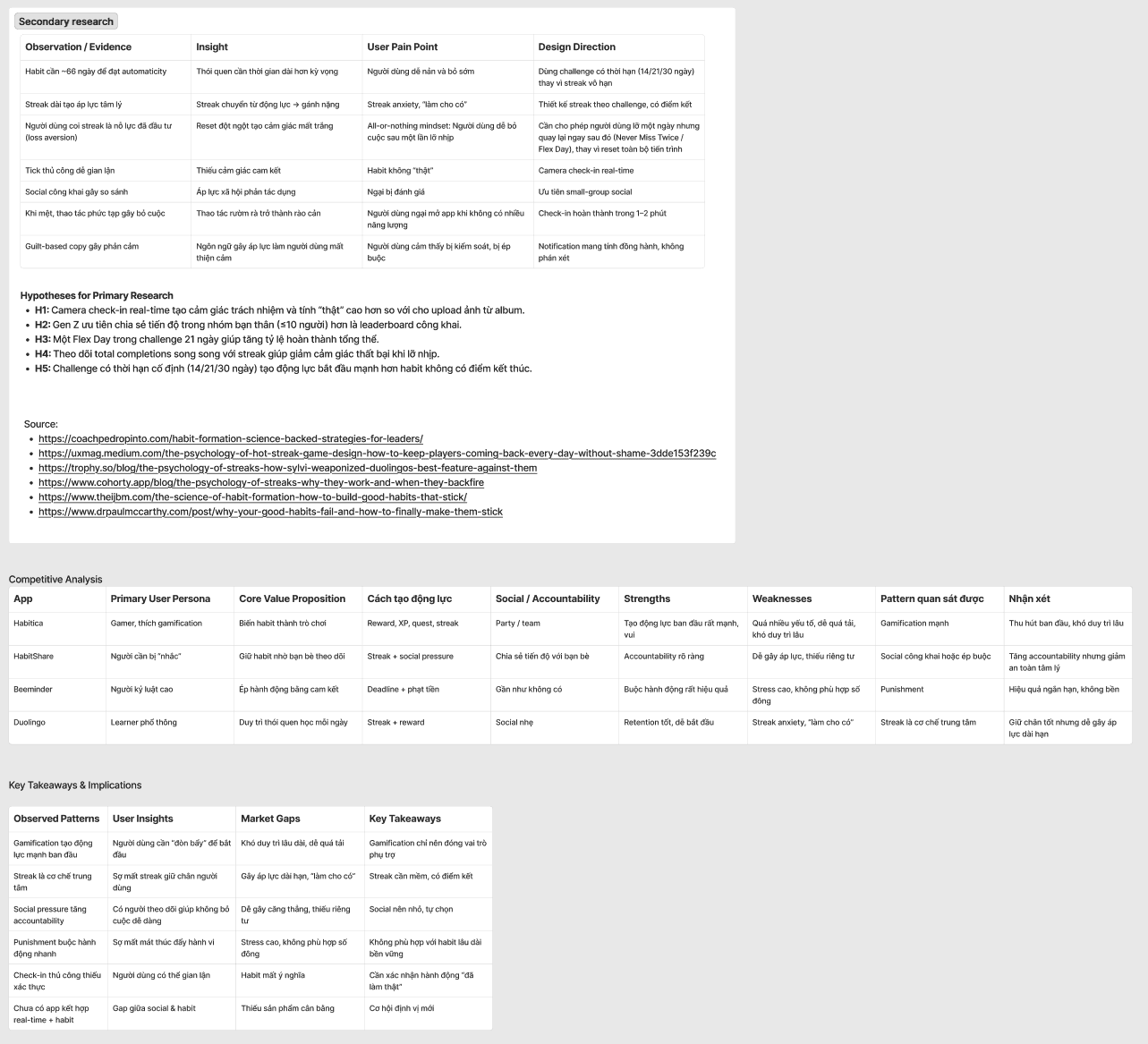
Before starting interviews, we conducted desk research to understand how existing habit-tracking apps work and why users often stop using them. This step was done by another UI/UX designer (Hieu San) and focused on reviewing popular habit apps, behavior psychology, and motivation systems used in self-improvement products.
The research looked at topics such as habit formation models, streak-based tracking, motivation vs pressure, social accountability, and common reasons users abandon habit apps. The goal of this step was to collect background knowledge and prepare for user interviews with clearer assumptions.
4.2 Research Plan
After the desk research, I created a research plan to define interview goals, target users, and key questions.
The main objective was to validate whether real users experience the same problems found during desk research, and to understand what actually makes people stop building habits.
I interviewed 5 users who were trying to build habits such as exercising, reading, studying, or self-improvement. During the interviews, I focused on their daily routine, their experience with habit apps, and the moment when they lost motivation.
From these interviews, I collected notes, patterns, and repeated behaviors that later became the foundation for defining the problem.

4.3 Empathy Map, Persona, and Journey Map
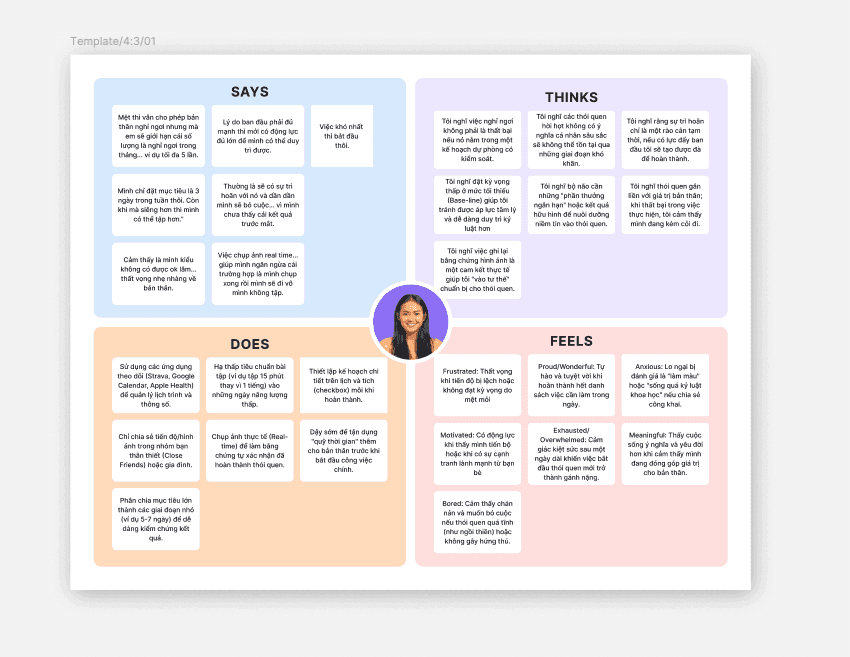
After collecting interview data, I organized the findings using an empathy map to better understand what users think, feel, say, and do when trying to maintain a habit. This helped reveal that users often start with strong motivation, but feel discouraged when they cannot follow the plan perfectly.
Based on the interview patterns, I created a persona representing the main type of user: someone who wants to improve their life but struggles with consistency due to busy schedules, low energy, or feeling pressured by strict systems.

To understand where users fail in the process, I created a user journey map showing the full experience from starting a habit to losing motivation. The journey map showed that the problem is not lack of intention, but the lack of flexibility in current habit-tracking systems.

Define
After synthesizing research, the goal of this phase was to define the core problem before designing features.
5.1 Key Insights
• The biggest friction happens at the starting moment
• Gamification helps start but not sustain
• Users prefer flexible discipline
• Small group sharing feels safer
• Manual check-in reduces commitment
• Users want long-term progress, not only streaks
5.2 Problem Statement
Users want to build long-term habits, but most habit apps are too rigid and create pressure, which makes users lose motivation and stop using the product.
5.3 Design Opportunities
• Flexible progress instead of streak reset
• Allow rest without failure
• Real action check-in
• Small group accountability
• Long-term progress tracking
• Lower starting friction
Structure Phase
6.1 Feature List & Card Sorting
Before designing screens, I listed all possible features and grouped them using card sorting to define the first product structure. This helped identify main sections, priorities, and relationships between features.

6.2 Sitemap
After grouping features, I created a sitemap to define the main navigation structure and key sections of the product.

6.3 Hook Model
To design a habit product that users can keep using long-term, I applied the Hook Model to define how the product creates a behavior loop.

Project Status
This project is still in progress. The research and structure phases have been completed, and the next steps will focus on interaction design, UI, and testing.This case study will be updated as the project continues.
Thank you for reading.